The One Drop Rule
Written By Anthony Jones
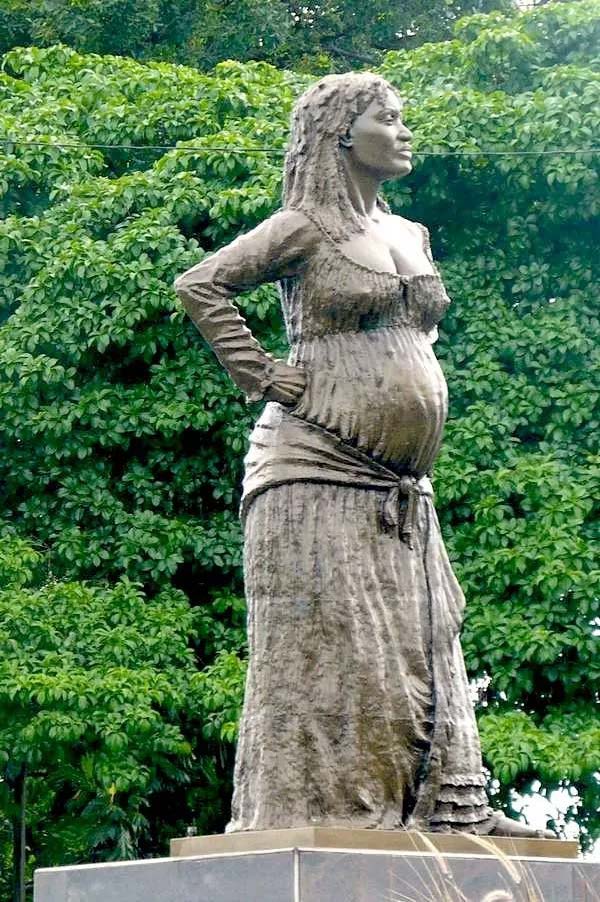
La Mulatresse Solitude (Solitude, The Mulatto) was a slave woman born in 1772 on the island of
French Guadeloupe in the Caribbean. Little is known about her, not even her real name. After the
successful French Revolution, slavery was abolished in 1794 in France and its colonies (including
Guadeloupe, Martinique, Haiti, Louisiana and French Guiana). Once Napoleon became the dictator of
France, he reinstated slavery in 1802, causing revolts across the colonies. In Guadeloupe, Solitude was a
part of a slave revolt along with revolt leader Louis Delgres. After months long battles, Louis realized he
wouldn’t be able to win. He, along with many of his followers, committed suicide by igniting gunpowder,
killing them along with French soldiers. One of the spectators of this was Solitude. Solitude was
kidnapped and beaten, and would have been executed on the spot by the French troops if it weren’t for her
being pregnant. They waited until November 29th, 1802, a day after her child was born, to hang her, a
death penalty very common for people like ‘her’. Her final words being, ‘Vivre libre ou mourir’ – Live
free or die. Despite being dead for over 200 years, her image is still chained down to this world, this is
because she is remembered as Solitude the Mulatto, and not by her name, which is lost to time. Mulatto,
the term that originated from the Latin word for mutt. She was seen as a mutt. She will forever be
remembered as this for being mixed with African DNA.
I’ve asked this question to people from vastly different walks of life. This question made me
notice a ton of overlaps among the many people I’ve asked. I keep talking about a question, but not saying
anything about said question. This question… is a question that makes you question if you are even
asking the right questions. “Anthony, what is this question that you are talking about?”, and I will be more
than glad to answer that question. I’m definitely insisting upon myself, and I know that you’ve noticed the
insistence of the word question. I wanted to start my essay with a written representation of what it’s like to
search for something. It’s confusing, there are dead ends, there are no concrete answers, and it is annoying
as hell. What is this thing that I am searching for, the thing that made me notice overlapping similarities?
The question that I asked many people was, “Do you know your family history?”. This then created a new
question for me, why do most people in the United States not know their family history? There are many
reasons, but one reason that appeared consistently was the need to hide something; many times,
something painful.
I had to learn from a young age that you are perceived differently by different people, no matter
what. I’d say that I grew up in two cities when I was younger. My upbringing was between both my parents and my grandparents. My grandparents lived in Dayton, Ohio, along with many other family
members on my mother’s side. Dayton has a huge African-American population, and is the 30th city in
the United States with the most black people. My siblings, my parents, and I lived in Miamisburg, a
predominantly white suburb of Dayton, Ohio. My parents worked long hours during the week, my mother
worked as a pharmaceutical scientist, and my father worked as a business owner. So when they worked,
we would be over at our grandparents house. This upbringing gave me the experience of living in two
environments that were dominated by races that are seen as “the polar opposites of each other”. Black and
white, literally.
Discussing the racial populations is essential to this story because there were things asked of me
when I was in Miamisburg that were not asked when I was in Dayton. As a child, I was constantly asked
things that I would have no ability to answer. I do not remember a specific instance in full detail, but I do
remember that an overlapping question would be “why do my eyes look Chinese?”. I don’t know. What an
odd thing to say. Either that, or they would mimic racist rhetoric against Chinese people against me. This
question used to be asked consistently, but it doesn’t anymore. I’m not as ‘ambiguous’ as I was as a child,
so the blackness is seen first. This question was not asked around other Black Americans in Dayton,
because many of them had the same eye shape that I did, the epicanthic fold. Many African Americans
have an epicanthic fold, one of the reasons is linked to possible Indigenous American DNA. However, not
in the way that claims ‘African Americans are Native Americans’, but in a way that opens doors to a
conversation that’s much deeper.
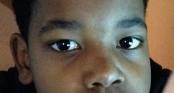
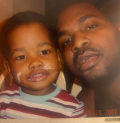
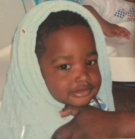
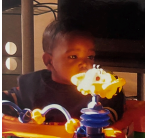
Childhood Images of Me.
I had two friends in elementary school that I was really close with, one was named Emmalee, and
the other was named Esohe. All 3 of us were considered ‘Black’ in the United States, but as I’ve gotten
older, I’ve realized we’re not the same; we were labeled the same because of the one-drop rule. Emmalee
has an African American father and a European American mother, but because of America’s history of
racism, she was not even considered biracial. One time, I had a teacher who claimed that a specific five
students in the classroom were always being disruptive. Coincidentally, these five students were all
‘black,’ including my friend Emmalee and me. My friend Esohe was born to two black Nigerian parents,
making her of 100% Nigerian origin. Whenever we talked about our families and traditions, there was
always a stark difference between the two, but I never knew why. I just assumed that we all have different
experiences, which is true, but it was more than that. She had a direct connection to Africa, which
confused me. I was considered African all of my life, but I never knew anyone from Africa in my family.
Why is that the case?
I didn’t look biracial like my friend Emmalee, so I assumed that I looked African, but I didn’t look
like my friend Esohe. This discussion could seem unimportant to most, but because of how race affects
the way Black people live everyday, I began to notice at an early age that we weren’t all treated the same,
or had the same experiences, and it was more than just ‘different upbringings’. When I started going to
CCAD, and I began to hang out with groups of people of direct African descent, I was constantly asked,
“Where am I from?”. A specific instance I can recall happened this summer, where I attended an
Afrobeats event with some friends, and someone asked “what am I?”. I assumed that it was because
during the slave trade, Africans across the West African coast were taken and forced to breed with one
another, creating a population that is mixed with a bunch of African regions, plus the small Native
American element. My maternal grandmother explicitly said that we were mixed with Native American
and African. I didn’t need to question it because my grandmother visibly looked African and Native. I
wanted to learn about my family story because so much of it is hidden, so I knew that I would most likely
have to start with a DNA test to get the ball rolling. Imagine my surprise when I did a DNA test and saw
that I had much more European ancestry than I did Indigenous American. What was strange was seeing
the number of white cousins I had. On my mother’s side, all of the recent fully white relatives are
coincidentally 3rd cousins twice removed. A third cousin twice removed means we share the same great
x5 grandparents, which can range between 150 to 180 years from today. The slave trade in the United
States ended 157 years ago. Nobody within my family wants to acknowledge our European DNA because
we would have to recognize the fact that our African ancestors were victims of assault, and a specific kind
of assault. Another realization I came to, is the fact that most of my recent ancestors, the mixed ones,
were most likely forced into being African Americans because they didn’t have a choice but to be.
Me and My Maternal Grandmother
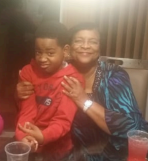
The discovery of this amount of European DNA shocked me, but what surprised me even more was that most of it came from my Haitian father. Haiti is considered the most genetically African country in the Americas because of how the slave trade ran in the country. The average lifespan of a Haitian person in Colonial Saint Domingue was only two years; it was cheaper to work enslaved Africans to death than to feed them and have them live longer. Almost 1 million slaves were imported to the island, compare that to the United States, where only close to 400 thousand people were imported. When a slave revolt broke out and created the first Latin American country, the majority of the population that is now Haiti, who were mostly 90%-100% African, continued to procreate with one another. This history was not the same history that my father had. My grandfather was a mixed-race man, part Black, part White, and part Middle Eastern (Syrian). He never claimed my father, because my father was a byproduct of him stepping out of his marriage with his wife, a wife who was also Syrian and a part of the upper class of Haiti. This was a clear example of something that’s still perpetuated today: black people (especially black women) are okay to have sex with, but not to settle down with. What was an official law in the United States was an unspoken policy in Latin America. You don’t procreate with black people, because one drop of blackness was dirty; this would later be extended to other races. This was implemented to maintain white supremacy and the ‘purity’ of the white race.
I began to wonder if this experience was unique to just Black Americans. I started to ask White Americans around me if they knew anything about their family background. Most people responded with no, but they shared small details that may or may not have seemed important to them, but were enough for me to research. Most of these people responded that their families were; for example, German or Irish. I wanted to look into the history of this, because this history is what shapes our identities. The United States was not only built on white supremacy, but specifically Anglo supremacy. Early German, Irish, and Italian settlers of the United States were treated as sub white, many times being considered a whole separate race (Italian and Ashkenazi Jewish people). This world is set up as a pyramid when it comes to races, with white at the top and black at the bottom. However, there are nuances in between these two races, and there are even nuances within the two races listed. In order for many of the non-Anglo people to blend in, they had to anglicize their last names and leave behind certain cultural practices. For example, the Irish last name O Suillebhain to Sullivan, the German last name Müller to Miller, the Italian last name Abatte to Abbott, and the Ashkenazi surname of Speyer to Shapiro. However, there is a stark difference between black and white Americans’ experience with assimilation. No matter the fact that we still have our colonial surnames, no matter how many years separated from West Africa we have been, the racist ideas that come with thinking about Africa continue to be a part of us today. This, as stated before, is because of the one drop rule, the rule that deemed anything that was African is dirty. We will forever be ‘dirty’ to the world.
Two examples come to mind when I think about the dichotomy of ‘Black people’ living within the Americas; these examples are songs by the Guadeloupean/French singer Tanya Saint Val. The first example comes from her 1997 album Secret, titled ‘Solitude’. This broad title leaves people curious about what exactly is going to be sung. The instrumental is similar to what was seen in American R&B at the time; it’s very calming, making you want to close your eyes and soak in the words, which are probably just jargon. But as we listen to the music, we learn that it’s not about jargon, it’s about Solitude the Mulatto, the same woman I opened this writing with.

In the song, Tanya sings the chorus (in Creole),
‘Solitude, fanm kreyol, fanm kouraj, mwen ka sonje’w. Non, pa bliye’l.’
‘Solitude, a Creole woman, a courageous woman, I will remember you. Please don’t forget her.’
Solitude was considered a rebellious criminal in her time, and executing her through hanging was seen as a just punishment for a monster that she was. The monster of France, an African mutt. Stories like Solitude’s force those to remember where exactly many of the harsh treatments and stereotypes on ‘black’ people today stem from. These stereotypes, like slavery, are now ancestral. Tanya sings this lyric in a sort of pleading manner, begging the listener to continue to speak her name. It’s important to note that prior to this, Tanya was a strictly pop singer, making popular zouk music that spread across France like wildfire. A voice like hers singing about Solitude introduced a new generation to ‘La Legende de Guadeloupe’
The second example is from her 2002 album Ansanm, titled ‘Psaume 23’. Most of Tanya’s songs are sung in Creole, the common everyday language of the Creole people in the Caribbean. However, this song is specifically sung in French, and is a song that is named after one of the Psalms of the bible, Psalm 23. Psalm 23 (in a broad descriptor) is about God being able to provide, protect, and restore one when they are physically and emotionally drained. If one is in a dark place that may seem inescapable, God can walk them through that path, like a shepherd: ‘The lord is my shepherd.’ However, this contrasts with the album cover. This album cover looks like a standard album cover, with Tanya in the middle of it. However, it becomes nuanced once you zoom in on the details.
Cover of Tanya Saint Val’s ‘Ansanm’. Ansanm - Creole word for Together.
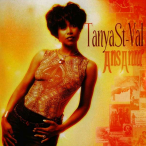
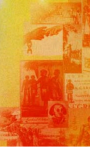
On the cover are images from the Trans Atlantic Slave Trade. One image that is the most important to me, is the one that comes from a flyer selling African slaves in modern day South Carolina.
Slave Auction Poster from British South Carolina, 1769.
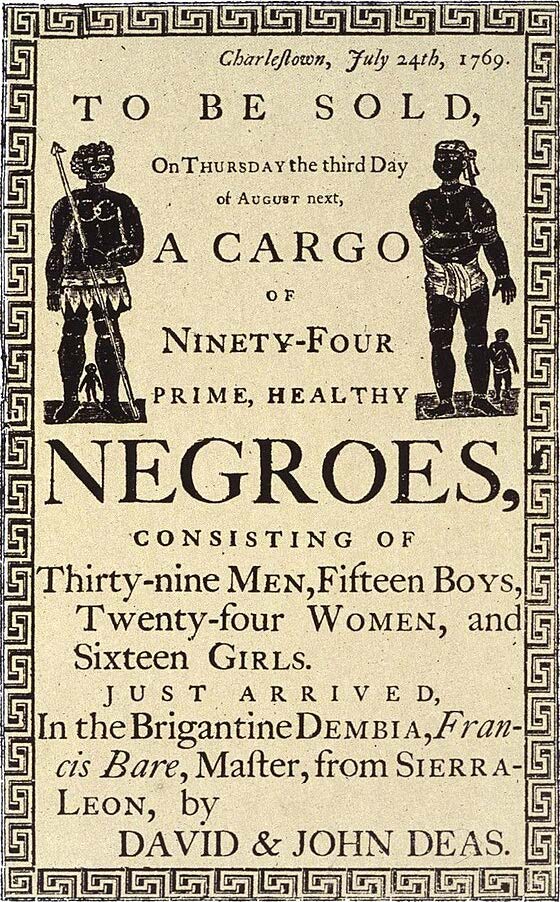
During the period of slavery, slaves were beaten to create cotton, sugar cane, and tobacco. Many
Africans converted to Christianity in order to be freed, because it was a sin to enslave fellow Christians as
Christians. However, this would lead to new rules being created in order to keep the slave class, even if
they free themselves from the demonic pagan voodoo religions. While today, we live in a world where we
can decide what religions we want to follow, we can not ignore the history of Christianity’s introduction
to North and South America. Our dark skin, bigger noses and lips, and curly hair made it difficult for
them to assimilate, no matter how much they tried. Every time they tried, a new rule would be added to
say no. It’s not a coincidence that these two polarizing topics were put together, slave imagery, with a
bible quote as the song title. No matter how Christian we become, no matter how ‘American’ or ‘French’
we become, we are still lower class negroes, even if it’s just one drop. This song perfectly illustrates how
the one drop rule, official in America, but an unspoken rule in the rest of the continent(s), affected the
way the Black diaspora had to navigate the world.
What was the point of any of this? Why should anyone even care about their family history this
much? It doesn’t have any bearing on who they are now, and those people before us, aren’t us. These were
all things that I thought once, but was forced to consider because of my identity in this country. Even
though I was forced to think about my identity at a young age, I am glad that I decided to look into my
family history, because while these different stories are a part of the past, no acknowledgment of said past
is dangerous and forces us to live through the same eras over and over again. Our ancestors, whether if
you’re a descendant of the Slave Trade, descendant of British settlers in the 13 colonies, An indigenous
american who’s family has lived here for generations, a German person fleeing a wartorn Germany for to
experience the ‘American Dream’, or even a Negrito from the Philippines who moved to the US after
American colonization, they were all required to cover up the dark histories of their family lineages to
create the new ‘American’ identity.
However, there is a big difference between now and then. The big difference is that it is now
2025, not 1925, 1825, etc. We don’t have to bind ourselves to the same strict rules that were forced upon
our ancestors. I personally believe that in order for us to progress, we have to become uncomfortable, and
this discomfort means having to know who you truly are, and address ALL of the figures within our
lineages. Women like Solitude fought for the people of today to live free, not chained to the rules that
defined her 200 years ago. This rule can be applied not only to black people, but everyone on earth,
especially in the label heavy ‘New World’ / Americas. Let’s be honest though, because I am not
delusional. I am going to be seen as a black person in America, because that’s how I was raised in my family, and that’s how I’ve been perceived. Shoot, this begs the question, what do I even identify as? How
does someone like me go about labeling themselves?
When I think about a label to call myself, concrete words don’t come to mind. I think it’s funny
that the most accurate label for me would be a ‘griffe’, a slur for someone who is 3⁄4 black, and 1⁄4 white.
The word Griffe comes from the French term for claw, the type of claws you would see on an animal or
monster specifically, very interesting I’d say. However, even this label still doesn’t fit me because I don’t
have white grandparents. This quarter, along with my African, Indigenous, and Arabic DNA, comes from
generations of mixed people. I would identify as a black person with a mixed background. I almost wish
there was an option for ‘mixed’ on the census, like in Latin America, because identifying as solely ‘black’
makes everything I write seem a bit counterproductive. However, I am predominantly African. I will
forever pay tribute to the many diverse African groups that created me. While all of humanity came from
Africa, not everyone’s ancestors were systematically taken out of the continent through a transcontinental
human trafficking ring. My struggles today, along with other ‘black’ people today, are their struggles as
well, even if it has just manifested itself into a new form. Most of my ancestors were called black because
of the skin and features they had, and I still resemble my African ancestors, even if there are small
differences. However, I am not African. And just like I am not African, I am not European, or Native, or
Arab. I grew up in none of these cultures, or resemble one of them 100%, even if the one drop rule says
that I do. Like everyone on earth, we have such diverse backgrounds that create us. We are doing a
disservice to ourselves and society by disregarding the multiple people who came together to create us,
whether they were good or bad. We are also helping white supremacy live on by allowing people to define
who we are based solely on statements put in place to maintain the purity of ‘whiteness’.
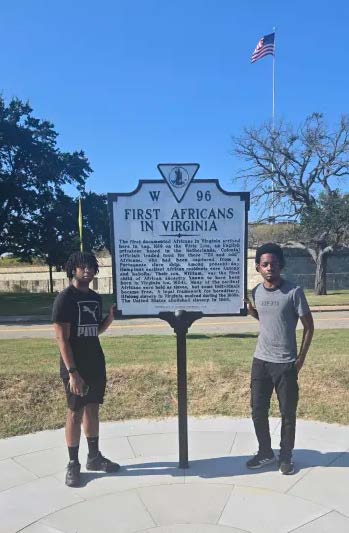
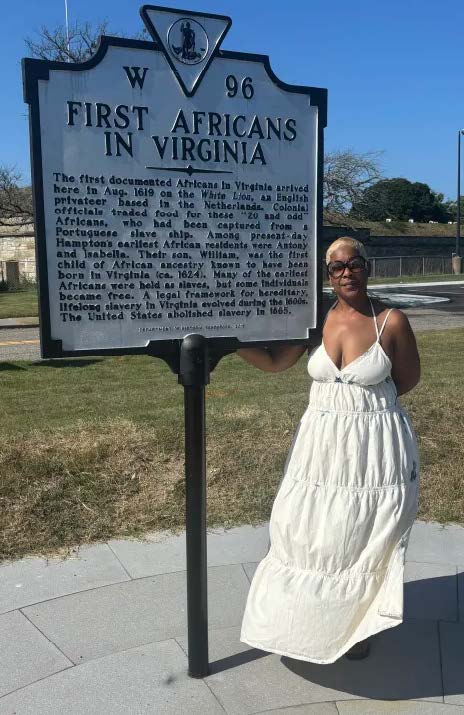
Images of me, one of my brothers, and my mother next to the African landmark in the Americas sign located in Hampton, Virginia, August 2025. The exact slave port from which some of our African ancestors entered the United States.