
Artist Benji Decker on his piece, "Ice Melts"
Botticelli’s PR members, Abigail Bobst and David Ruiz meet with Benji Decker to discuss the meaning behind his artwork and Botticelli’s 2026 spring edition cover, “Ice Melts”, as well as information on his future exhibit, “Native Sunscapes”
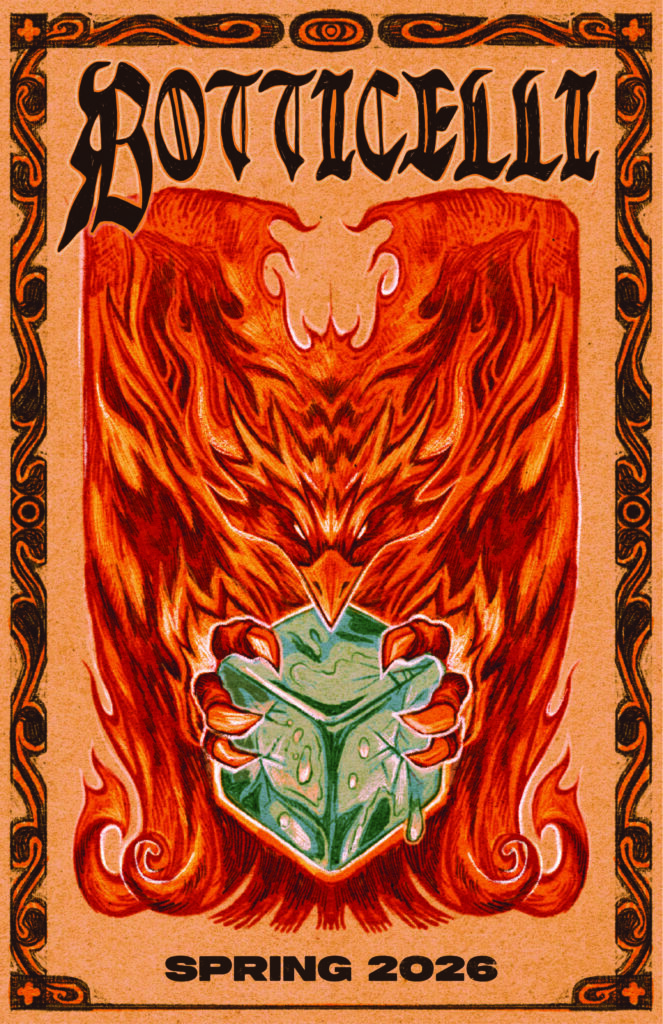
Q: What does your piece “Ice melts” represent to you? What made you want to create it in the first place?
A: The meaning of the piece lies heavily on the phoenix motif. There’s immense power held in this creature cycling through death and rebirth. That resilience speaks to our neighbors, friends and strangers facing violence and discrimination in this country each and every day. ICE’s violence, their hatred, is no different from any past militants seeking to enact a perverse agenda. In this piece, the phoenix melting ICE serves as a totem to the ever-lasting fight for all of our freedoms, while attempting to honor that resiliency. The resiliency which makes change possible regardless of how hard the opposition seeks to quench the flames.
Q: What was going on in your head when you were creating this piece? How’d you feel after it was done? And what message do you want people to take from your piece?
A: When I drew this up, I was thinking about how to communicate all my anger and grief into something meaningful. Selfishly, I needed that outlet; however, I did not want to communicate it in such a way that makes it about my feelings over the direct issues themselves. There is often a feeling that many of us artists feel when we see or hear something which disturbs us, and I needed to shake that before it became more complicated to process.

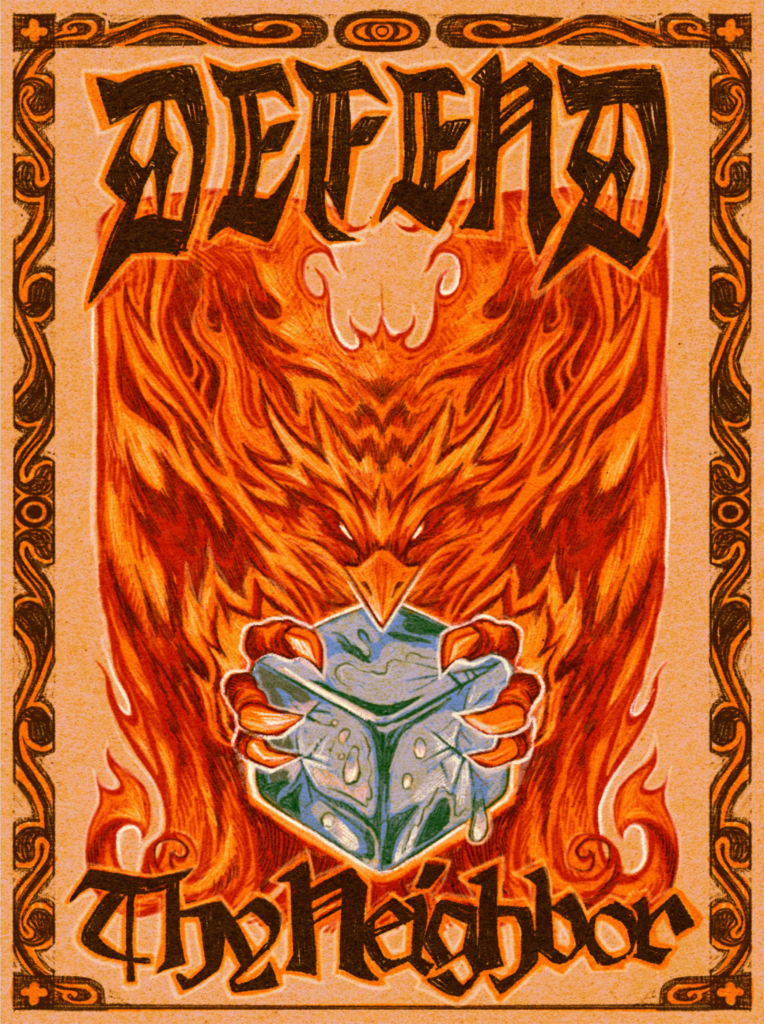
By the time I’d felt the piece was finished, I didn’t feel much different other than a slight spark of hope. The anger remains, as it should in the face of such violence. I hope folks can take what they need from its meaning. What it meant for me may not be the same for someone that has had a loved one abducted, those in our communities terrified of leaving their homes, or who may feel entirely unwelcome in a country they have been born and raised in. I only wish that this can provide some measure of solidarity and hope.
Q: Could you tell us more about the art style that you used for Ice melts? It’s very intricate and detailed, what inspired that style? Was there a reason you made it in that style?
A: I have really enjoyed playing with symmetry in my work. It’s a crutch – sue me. This style itself has developed from trying to reign in the chaos of doodles I’ve been doing for years. It allows me to navigate my ideas quickly, while being able to be expressive in the ways I visually want to communicate. Learning to improve composition through the eyes of graphic design has helped me with figuring out different ways to implement this as well.
Q: You have your thesis showcase coming up soon. Can you tell us a little more about what it is and what inspired you
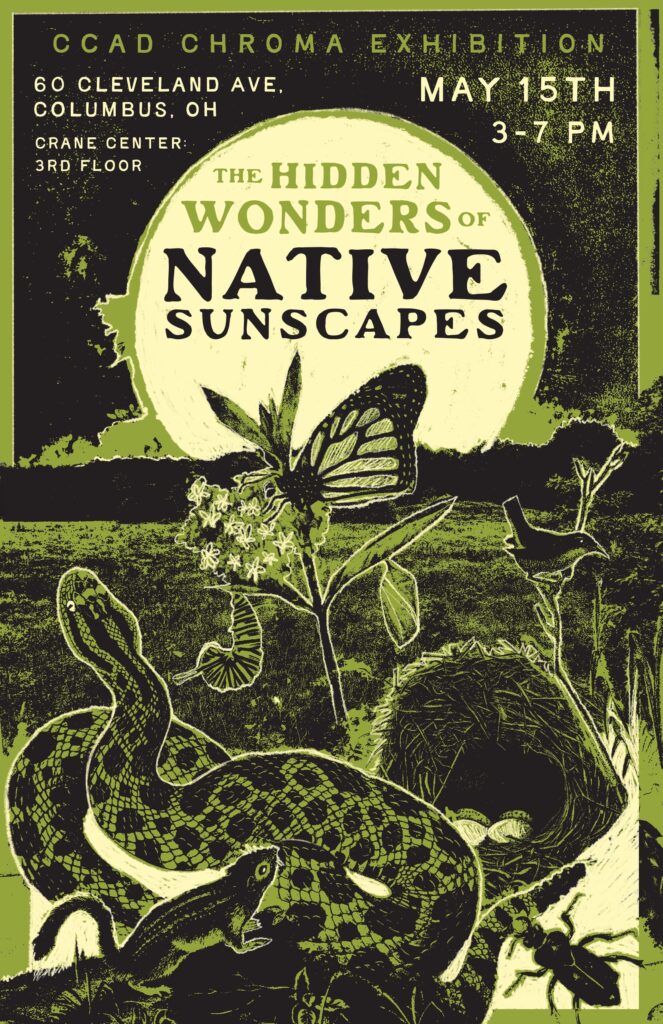
A: So, I’m building an immersive nature exhibit on a new classification of habitat by Gregory Lipps Jr. They’re titled Native Sunscapes. I’m not entirely sure how this happened as it has felt like it perfectly landed in my lap, and at the right time. At the start of capstone, I cold-emailed Greg, and heard back the same day regarding this problem he wanted to get marketing/design help on. The cool part is that I grew up surrounded by these same types of endangered open-canopy spaces he was talking about. From that point, I felt that I needed to try and put my best ideas forward for the sake of our native sunscapes.
A: Is there a reason you are doing an interactive show?
Q: I was incredibly lost as to how I could best help given this massive problem. Progress was only made when I took a step back and looked at this from a point of using the skills and mindset I already have. From here, I began to try and piece a narrative that could share what I’ve learned about sunscapes. It became clear from that point that it is best to show why someone should care about these spaces rather than imploring them to do so. This paired with artistic visuals to catalyze the education we’re hoping to provide has been the equation for all of this. Being able to personally interact with elements of sunscapes, while engaging the senses is one of the many ways to do that.
Q: Can you tell us when your show will be up for the public?
A: If you’re interested in learning more, visit The Hidden Wonders of Native Sunscapes on May 15th, from 3 – 7 PM in the Crane Center during CCAD’s Chroma.

