Jack Ramsey: A Told Story
(Chapter 1) Written by C.K.W. Lusero
1
In 2119, the world didn’t grow old; it just became more efficient.
Jack Ramsey sat in his garage, a structure of defiant, oil-stained concrete huddled beneath the shimmering shadow of the city’s atmospheric canopy. Above him, the sky was a curated shade of “Evening Violet,” filtered to prevent the psychological instability of a true sunset. On his wrist, the white polymer of his Sync-Band pulsed a rhythmic, nagging amber.
STRESS SPIKE DETECTED, the band whispered directly into his inner ear via bone conduction. WOULD YOU LIKE TO COMMENCE A CALM-STREAM?
”I’d like you to shut up,” Jack muttered.
The lathe groaned under the weight of his grip, its motor humming a low, protesting frequency that mirrored the vibration in Jack’s chest. He stared at the spinning block of oak, the wood a rough, brown blur against the clinical perfection of the workshop’s “Smart-Surfaces.” In 2119, wood was a luxury—a biological anomaly that required special permits and a high-tolerance filtration system. To the Ministry, it was a “Primitive Fire Hazard,” but to Jack, it was the only thing that felt solid in a world made of glass and light.
His chisel bit into the grain, sending a spray of fine dust into the air. The Sync-Band on his wrist flared a violent, warning red, the haptic sensors beginning to squeeze his skin in a forced rhythmic pattern designed to lower his heart rate. He ignored it. He was looking for the heart of the oak, the hidden curve that the wood had spent eighty years growing. The doctors said his obsession with the “Physical” was a coping mechanism for his deteriorating neural pathways. They told Sarah that the dementia was making him seek out tactile stimuli as his cognitive map dissolved.
Jack knew they were wrong. He wasn’t losing the map; he was finally seeing the terrain beneath it. He pressed harder, the scent of cedar and old earth rising from the shavings to choke out the synthetic lavender of the home’s air-scrubbers.
The garage door didn’t creak—it chimed. The magnetic seals disengaged with a polite, vacuum-sealed hiss that signaled Taylor’s arrival. She was twelve, and in the sterile glow of the overhead LED arrays, her school tunic shimmered with the iridescent protection of a Level-4 UV filter.
”Grandpa,” she said, her voice cutting through the mechanical whine of the lathe. “The sky is blinking again.”
Jack toggled the kill-switch. The silence that rushed in was thick, heavy with the scent of shaved oak and old machine oil. He wiped his hands on a rag that was older than Taylor’s parents, the grease staining his skin like a permanent map of his life’s work. He looked up at the high, narrow window near the ceiling. Beyond the reinforced glass, the violet atmospheric canopy was indeed shuddering. It wasn’t a flicker caused by a power surge; it was a rhythmic pulse, a slow dilation of the light that made the entire garage seem to expand and contract.
”It’s just the canopy recalibrating, Tay-Tay,” he said, though his own pulse was beginning to match the rhythm of the sky. “They’re probably adjusting the humidity for the overnight cycle. You know how the Ministry likes to keep the dew point precise.”
Taylor didn’t move. She stood near a pile of cedar shavings, her fingers twitching at her sides. “It’s not the moisture, Grandpa. It feels like the air is getting thinner. Like something is breathing from the other side of the glass.”
Jack stepped away from the lathe, the floorboards complaining beneath his heavy boots. He moved toward Taylor, his shadow stretching long and jagged across the white-tiled floor. In the flickering light, the garage seemed to lose its sharp edges; the corners softened, and for a fleeting second, the walls looked less like concrete and more like the bark of a gargantuan tree.
”Don’t look at the sky too long,” he warned, placing a calloused hand on her shoulder. “The Ministry says ‘Visual Artifacts’ are just the brain’s way of trying to find patterns in the noise. They’ll have a counselor at the door if your Sync-Band logs a ‘Perceptual Deviation.'”
Taylor looked down at her wrist. Her band was a clean, unblemished white, unlike Jack’s scarred and faded version. It sat silent, its sensors apparently satisfied with her biology. “Mine isn’t buzzing, Grandpa. It thinks everything is perfect. But I can feel the floor vibrating. Can’t you?”
Jack stayed still, holding his breath. He felt it—a deep, subsonic thrum that didn’t come from the city’s mag-lev lines or the humming power grid. It was a tectonic pulse, a slow, ancient heartbeat that seemed to be thumping against the very soles of his feet. It was the sound of something heavy waking up.
”It’s just the machinery, Taylor,” he lied, his voice sounding thin even to his own ears. “The world is full of ghosts made of metal. Now, come on. Your mother will be looking for us.”
They moved toward the transition door, the pressurized seal that separated the workshop’s grit from the clinical sanctuary of the main house. Jack kept his hand on Taylor’s shoulder, a gesture that was as much about grounding himself as it was about comforting her. Every time he crossed this threshold, he felt the world losing its flavor.
The door slid open with a chime that was perfectly tuned to a C-major chord—the Ministry’s researched frequency for “Domestic Harmony.” As they stepped into the hallway, the air changed instantly. The scent of oak and oil was devoured by the house’s filtration system, replaced by a scentless, ionized vacuum. The walls were a matte, “Quiet-Almond” white, designed to minimize visual stress.
”Jack? Is that you?” Sarah’s voice floated from the kitchen. It was a voice trained by the era: soft, measured, and stripped of any sharp emotional edges.
Before Jack could answer, Taylor stopped in the middle of the hall. She was staring at a framed digital portrait on the wall—a moving loop of the family at a government-sponsored park. “Grandpa,” she whispered, her voice trembling. “The trees in the picture… they’re moving differently.”
Jack looked. The digital oak in the frame was swaying in a synthetic breeze, but the rhythm was off. It was beginning to thrash, its leaves turning a deep, bruised purple that the Ministry’s color-palette didn’t recognize.
”Just a glitch, honey,” Jack said, though his heart hammered a frantic rhythm against his ribs. “Just a glitch.”
Sarah appeared at the end of the hallway, her silhouette framed by the soft, diffused glow of the kitchen’s recessed lighting. She was holding a nutritional canister, her thumb rhythmically swiping across a glowing interface on its side. Her movements were fluid, polished by years of living in a world where friction was considered a design flaw. When she saw them, her gaze flicked immediately to the trail of dark sawdust Jack had tracked across the pristine, self-cleaning floor.
”The filters are going to be running at double capacity for an hour, Dad,” she said, her voice a gentle, melodic reprimand. “I’ve told you about the particulates. They aren’t good for Taylor’s respiratory index.”
”She’s fine, Sarah,” Jack said, his voice sounding like a rusted hinge in the quiet house. “She was just watching me work. A little dust never killed a Ramsey.”
Sarah sighed, a sound that was perfectly modulated to convey disappointment without triggering a stress alert on her Sync-Band. She walked toward them, her bare feet making no sound on the soft-composite flooring. She reached out to brush a stray wood shaving from Taylor’s hair, but her hand paused. She looked at the digital portrait on the wall—the one Taylor had been staring at—but the “glitch” had passed. The trees were back to their swaying, programmed loop of vibrant, safe green.
”You’re late for your evening cognitive check,” Sarah reminded him, her eyes softening with a pity that Jack found harder to stomach than her anger. “The counselor says consistency is the only way to slow the unravelling. You have to stay in the present, Dad. The garage… it keeps you in the past.”
Jack moved toward the kitchen table, which was less a piece of furniture and more a seamless extension of the floor’s white geometry. He sat down, the weight of his body feeling heavy and archaic against the chair’s adaptive foam. “The past is where the sturdy things are, Sarah,” he said, his fingers tracing the invisible seam of the table. “Everything in this house feels like it was grown in a petri dish. It’s too smooth. A man needs a bit of texture to know he’s still standing.”
Sarah didn’t argue. In 2119, arguments were considered a failure of communication logic. Instead, she placed a small, translucent cup of “Life-Sync” supplement in front of him. It was a thick, pearlescent liquid designed to fortify neural connections and suppress the “Analog Echoes” that the Ministry blamed for his condition.
”Rich called while you were in the garage,” Sarah said, changing the subject with a practiced smoothness. “He said he found a new lens for his old optical camera. He wants you to come over tomorrow and help him ‘recalibrate’ the housing. He sounded… excited. In that way that makes the Ministry’s baseline monitors blink.”
Jack felt a small, genuine smile tug at the corner of his mouth. Rich was the only one left who still remembered the smell of real film chemicals. “Rich always did like to live in the margins. He’s probably found a way to bypass the city’s glare-filters again.”
”Just be careful,” Sarah warned, her eyes darting to the sensor-lens in the ceiling. “The Ministry is tightening the ‘Legacy Restrictions’ this month. They don’t like groups of ‘Regressives’ gathering without a licensed facilitator. They say it creates pockets of unpredictable sentiment.”
Jack grunted, the sound a low vibration in his throat that seemed to rattle the delicate porcelain-like cup in front of him. “Predictable sentiment is just another way of saying they want us all humming the same tune. Rich and I, we just like the static.”
He looked over at Taylor. She hadn’t sat down. She was standing by the large, panoramic window that overlooked the suburban sector. In the distance, the spires of the Ministry’s regional hub rose like white needles, piercing the purple haze of the canopy. The needles weren’t just buildings; they were the lungs of the city, breathing in the chaos of the old world and exhaling the ordered, filtered reality Sarah clung to.
”Grandpa,” Taylor whispered, her forehead pressed against the cool glass. “The man is back.”
Jack went still. The “Life-Sync” supplement remained untouched on the table. He stood up, his joints popping—a sound Sarah winced at—and walked to the window. Down on the street, the automated cleaning drones were making their silent, rhythmic passes, scrubbing the white pavement to a surgical shine. But standing near the edge of the Ramsey’s property line, right where the manicured lawn met the sensor-embedded curb, was a figure that shouldn’t have been there.
The man was dressed in a heavy, dark fabric that didn’t reflect the street’s blue mag-lev glow. He stood perfectly still, a shadow that the streetlights couldn’t seem to illuminate. He was looking directly up at the window, and though his face was obscured by the deepening “Evening Violet,” Jack felt a sudden, sharp prickle of recognition. It wasn’t someone he knew, but it was a feeling he remembered—the weight of a secret.
”Sarah,” Jack said softly, his voice losing its gravelly edge. “Check the external feed. Who is that?”
Sarah stepped toward the wall console, her fingers dancing through the air to summon the exterior security interface. A shimmering holographic pane manifested, showing a high-definition, 360-degree view of the property. The street was bathed in the clinical, blue-white light of the perimeter sensors. The cleaning drones hummed along their pre-programmed paths, their brushes whirring against the curb.
”There’s no one there, Dad,” Sarah said, her voice tilting toward that patient, clinical tone again. She swiped through the spectrums—infrared, thermal, motion-density. The display remained a sea of cool blues and steady greens. “The sensors aren’t logging any unregistered bio-signs. It’s just the light-bleed from the canopy. It can create high-contrast shadows this time of evening.”
Jack leaned in, his breath fogging the smart-glass. He didn’t need a sensor to tell him what his eyes were seeing. The figure was still there, a solid anchor of darkness amidst the flickering neon. The man raised a hand, and for a split second, a glint of something metallic flashed—a silver key or a coin—catching a stray beam of violet light.
”He’s looking right at us,” Taylor insisted, her breath hitching.
”The HUD is clear, Taylor,” Sarah countered, though her eyes flicked nervously to the sensor-lens. She turned the display toward Jack, showing him the empty, pristine sidewalk on the screen. “See? Just the pavement. You’re both tired. The recalibration tonight is particularly heavy, and it’s playing tricks on your optics.”
Jack didn’t look at the screen. He watched the shadow turn and walk toward the edge of the light, vanishing into the darkness of the “Legacy Zone” across the tracks as if he had never been more than a smudge of ink on the horizon.
Jack stepped back from the glass, the heat of his own breath still lingering on the pane in a fading circle of mist. He could feel Sarah’s eyes on him—not looking at him, but evaluating him. It was the look she gave the household appliances when their efficiency dropped below the ninety-percent threshold. To her, the man on the sidewalk was a phantom of a misfiring brain, a “Visual Glitch” born from a refusal to take his supplements.
”I’m not imagining the weight of a person, Sarah,” Jack said, his voice dropping into a low, stubborn register. “Shadows don’t walk with a limp. And they don’t carry things that catch the light.”
Sarah closed the holographic interface with a sharp, dismissive flick of her wrist. The blue light vanished, leaving the kitchen in the dim, simulated amber of “Rest Mode.” “We’ll talk about it after you’ve had some sleep, Dad. I’ll run a diagnostic on the external sensors in the morning. Maybe a bird fouled the lens.”
She didn’t believe it, and Jack knew she didn’t believe it. In this world, birds were as rare as oak trees, their flight paths strictly regulated by the same Ministry that curated the clouds. He looked at Taylor, who was still staring at the empty street. She looked pale, her Sync-Band finally beginning to pulse a soft, rhythmic blue—the “Anxiety-Reduction” mode.
”Go on, Tay-Tay,” Jack whispered, patting her hand. “Your mom’s right. It’s been a long day of… patterns.”
But as he turned toward his own room, Jack felt the weight of the chisel in his pocket. He hadn’t realized he’d brought it in from the garage. The cold steel felt like a secret weapon against a world made of light and lies.
The hallway to Jack’s bedroom was a tunnel of “Sensory Neutral” lighting, designed to transition the mind into a state of pre-slumber. Every few steps, the floor gave a subtle, pneumatic sigh, adjusting its density to match his stride. It was a house that anticipated his needs before he even felt them, a house that wanted him to be nothing more than a quiet passenger in his own life.
He reached his door and it slid open silently, recognizing the unique gait of his weary knees. Inside, the room was a minimalist cell of comfort. No dust, no clutter, no history. The walls were embedded with “Sleep-Sync” emitters that would soon begin pumping a low-frequency delta wave into the air to drown out the noise of his thoughts.
Jack sat on the edge of the bed, the “Adaptive-Silk” sheets cool against his skin. He reached into his pocket and pulled out the chisel. It was a jagged, ugly thing in this room—a piece of sharpened carbon steel with a handle of scarred hickory. He laid it on the bedside table, right next to the small, white terminal that tracked his heart rate and respiratory efficiency. The contrast was absurd. The chisel looked like a fossil, a bone from a prehistoric beast that had no business being in a clean, digital tomb. He stared at the tool, wondering if the man in the street carried a piece of the past too.
The delta-wave emitters began their work, a nearly imperceptible thrumming that Jack felt in the marrow of his bones. It was supposed to be soothing, a digital lullaby to smooth over the jagged edges of a day spent in the “Analog.” But tonight, the frequency felt wrong. It didn’t harmonize with the subsonic pulse he’d felt in the garage; instead, the two vibrations clashed, creating a dissonant tension in the air.
He lay back, staring at the ceiling. The surface was a blank canvas of “Smart-Plaster,” but as his eyes adjusted, he saw the faint, glowing lines of the household grid beneath the finish. Everything was connected. The walls talked to the Ministry; the floor talked to the medical servers; even the air he breathed was logged, analyzed, and balanced.
He thought of Rich. Tomorrow, they would sit in Rich’s basement, surrounded by the illegal smell of ozone and old glass, and they would pretend for an hour that the world was still made of things you could break. Rich didn’t have a granddaughter to worry about, and his daughter had moved to the “High-Sync” sectors years ago, leaving him to rot in his nostalgia. Jack envied him that solitude. It was easier to be a relic when you weren’t trying to tether someone else to the ground.
He closed his eyes, but the image of the man in the street remained burned into his retinas—a dark smudge on a white world, holding a silver secret that refused to be digitized.
Sleep did not come as a soft descent; it felt more like a faulty connection, flickering between the hum of the emitters and a deep, shadowy silence. Somewhere in the middle of the night, the “Sleep-Sync” terminal on his nightstand let out a sharp, discordant chirp. It was a sound Jack hadn’t heard in years—the alert for a manual communication request, bypassing the standard Ministry filters.
He sat up, his heart knocking against his ribs. The terminal’s screen was no longer the soft, calming blue of the medical monitors. It was a harsh, flickering gray, filled with lines of scrolling text that moved too fast for his aging eyes to track.
”Rich?” Jack whispered, his voice cracking.
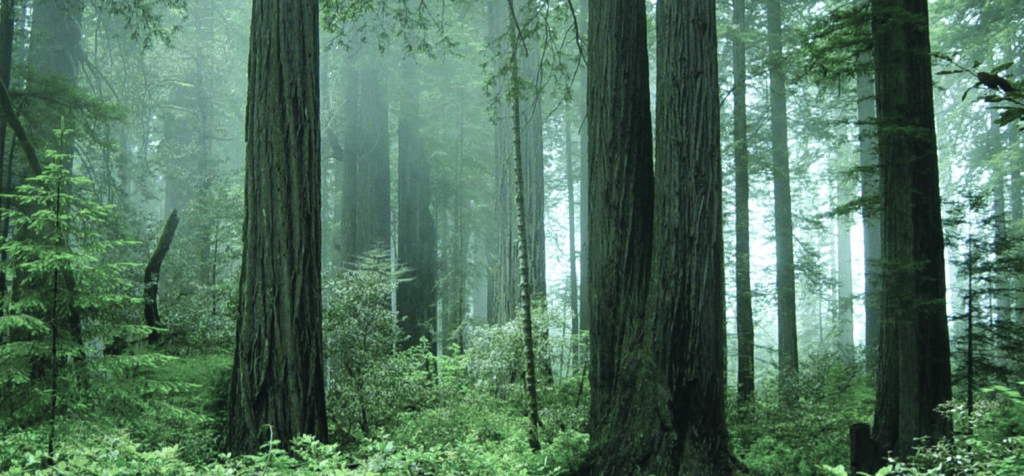
The terminal didn’t answer with a voice. Instead, the screen froze, displaying a single, low-resolution image. It was a photograph, or a digital reconstruction of one—grainy, black-and-white, and depicting a dense thicket of trees that looked nothing like the curated parks of the city. In the center of the frame stood the man from the street, his face still hooded, his hand outstretched.
On the bedside table, the old hickory handle of the chisel seemed to glow with a faint, sympathetic heat. The delta waves in the room shifted, the frequency rising until it became a physical pressure behind Jack’s eyes. The ordinary world was fraying at the seams, and the static was finally starting to speak.
The image on the terminal didn’t just sit there; it pulsed, the pixels bleeding into one another like wet ink. I stared at those trees—those real, messy, unpruned trees—and felt a phantom itch in my palms. It’s funny, isn’t it? You spend seventy years trying to be a “good citizen” of the future, breathing their filtered air and eating their calculated calories, and all it takes is one grainy photo to make you realize you’ve been starving the whole time.
I reached out, my trembling finger hovering just a millimeter above the screen. I wanted to feel the bark, even if it was just through a localized haptic interface. But the moment my shadow touched the glass, the screen went black. The delta-wave emitters cut out with a sharp pop, leaving the room in a silence so absolute it felt like being buried alive.
”They’re watching the line,” I whispered to the empty room.
I’m not a genius, and the Ministry would tell you my brain is more cobwebs than gray matter these days, but I know when a door is being slammed shut. Someone had tried to reach through the grid to find me, and the house had bitten back. I looked at the chisel. It was just a tool, but in the dark, it looked like a key. I wasn’t going to find any more answers in a bed that was programmed to keep me dreaming.
I stood up, and for a second, my knees screamed about the humidity or the lack of it, or maybe they were just protesting the fact that I was moving at three in the morning. In this house, three AM is the hour of “Deep Maintenance,” when the robots scrub the vents and the servers back up your soul. You aren’t supposed to be vertical.
I didn’t turn on the lights. If you give the sensors a reason to log “Abnormal Wakefulness,” they’ll have a drone at your door with a sedative before you can find your slippers. I navigated by the glow of the city’s atmospheric canopy leaking through the cracks in the blinds—that sickly, persistent violet that never lets you see the stars.
I know what you’re thinking. Jack, you old fool, just go back to sleep. Take the pill. Enjoy the climate-controlled peace. But that’s the trap, isn’t it? The Ministry makes the world so soft you don’t notice you’re sinking into it until your mouth is covered.
I grabbed my trousers and pulled them on, my movements slow and deliberate to avoid the floor’s acoustic sensors. I felt the weight of the chisel in my hand again. It was cold, honest, and heavy. I wasn’t heading for the kitchen or the bathroom. I was heading back to the garage. If the world was starting to blur, I wanted to be standing next to something made of wood.
The transition door back to the garage felt like a bulkhead between two different dimensions. On the house side, everything was soft, silent, and sanitized. On the other side lay the smells of the old world: the metallic tang of cold steel, the lingering scent of timber, and the dust that no Ministry drone had managed to fully eradicate.
Jack pressed his palm against the manual release—a hidden lever he’d modified years ago to bypass the digital log. The seal broke with a muffled thwack, and he slipped inside. The garage was bathed in the rhythmic, violet strobing of the canopy light. It caught the edges of his tools, turning his wall of wrenches and saws into a row of jagged, silver teeth.
I stood there in the dark, breathing in the air that actually had some bite to it. My heart was thumping a rhythm that the Sync-Band would have called a ‘Cardiac Event,’ but to me, it just felt like being awake. I looked at the lathe. In the weird, flickering light, the wood shavings on the floor didn’t look like waste anymore. They looked like fallen leaves. I started to wonder if the ‘Dementia’ wasn’t a breaking of my mind, but a stripping away of the wallpaper the Ministry had pasted over reality.
He walked toward the workbench, but he didn’t pick up a tool. He looked at the window where Taylor had seen the man. The glass was vibrating—a low, constant hum that he could feel in his teeth. The “Ordinary World” was still there, but it felt thin, like a piece of paper being held too close to a candle.
Outside, the “Legacy Zone” was a graveyard of the 20th century—crumbling brick chimneys and rusted railway tracks that the city’s expansion had simply flowed around like water around a stone. The Ministry didn’t bother to tear it down; they just smothered it in “Perceptual Dampeners” and told everyone it was a hazardous waste site. But from this angle, Jack saw the truth. The shadows in the ruins weren’t staying still. They were weaving together, forming shapes that defied the Euclidean geometry of the city’s master plan.
I leaned my forehead against the cool glass, and for a second, the garage disappeared. I wasn’t standing on a concrete floor; I was standing on damp earth. I could smell rain—real, unpurified rain that tastes like minerals and lightning. It was only for a heartbeat, a flicker of a different ‘now’ bleeding through the violet haze. When I blinked, I was back in the garage, but the window had a frost on it that shouldn’t have been there. It was mid-July in a climate-controlled dome, and I was looking at ice.
Jack reached out and touched the frost. It didn’t melt immediately. It felt like a physical puncture in the world’s logic. He realized then that he wasn’t waiting for the man to come back. He was waiting for the world to finish breaking.
The frost under his fingertip wasn’t just cold; it was a conductor. As the chill bit into his skin, the violet light of the garage bleached into a blinding, crystalline white. The hum of the city’s atmospheric processors was swallowed by a magnificent, muffled silence—the kind of silence only six inches of fresh powder can provide.
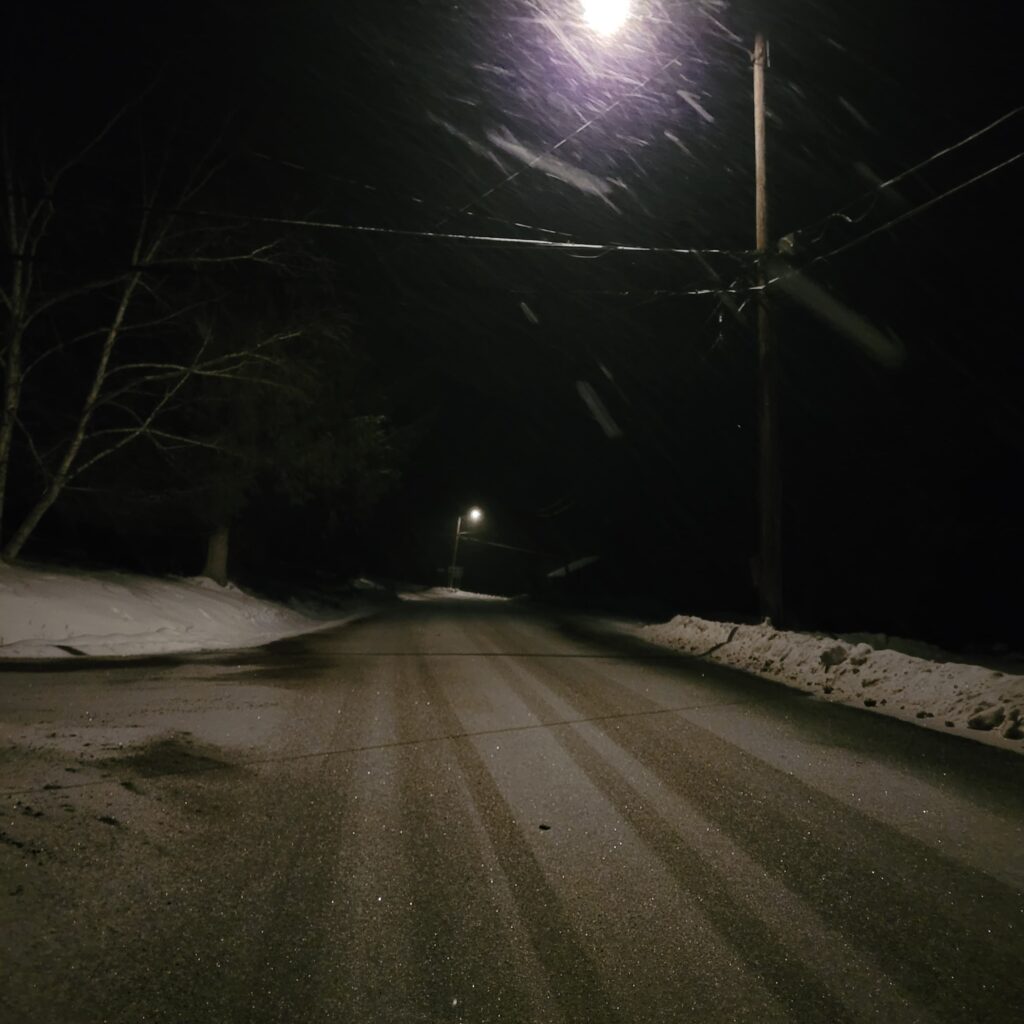
I’m eight years old again, and the air doesn’t smell like ozone; it smells like woodsmoke and frozen pine. I can feel the wool of my mittens, soaked through and heavy, as I pack a snowball until it’s as hard as a river stone. Beside me, Billy and Rich are screaming with a pure, jagged joy that would probably get them flagged for ‘Emotional Irregularity’ today. We aren’t following a schedule; we’re just heartbeats in the cold. Behind us, Moira is laughing, her bright red scarf a defiant streak of color against the white world as she shouts for us to wait. We are heading for the treeline, a place where the shadows are deep and the Ministry doesn’t exist yet. The sun is a pale gold coin, real and uncurated, hanging in a sky so blue it actually hurts to look at.
Jack gasped, his hand jerking away from the glass. The memory vanished, replaced by the sterile, violet gloom of the garage. But the laughter of his friends lingered in his ears, a ghost-echo of a world that hadn’t been “optimized” yet. He looked at his hand; it was trembling, but not from age. It was trembling from the sudden, violent realization that the memory felt more real than the room he was standing in.