Existence is Inherently Political
Written by Alex Skelly
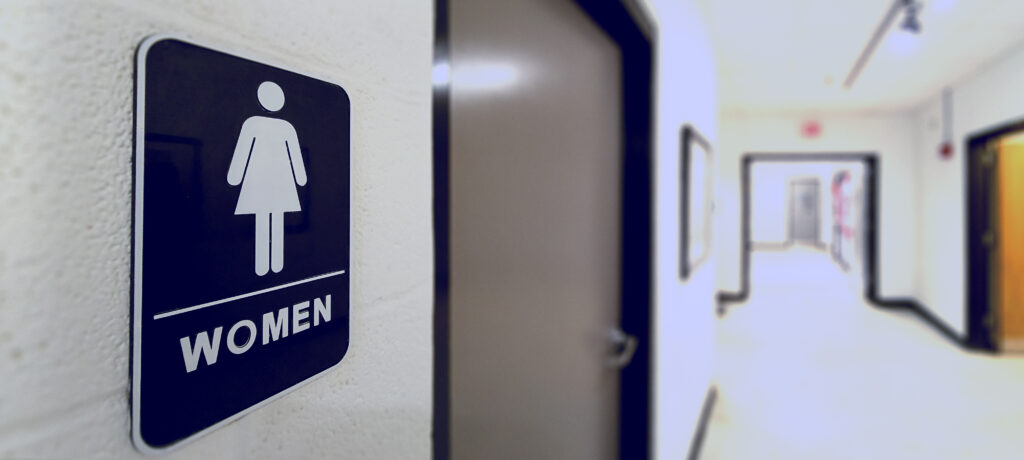
In the essay “Writing While Black,” Laura Warrell paints a very clear picture from the beginning. Her work is considered to be political for aspects she sees as normal, lived experiences. I’m not a person of color. I don’t share this exact experience. But I am a lesbian and a trans/non-binary person. And on these grounds, I have had similar experiences. My existence has become inherently political. Straight authors write books where their love is forbidden, but for them it’s just a concept. I have spent sixteen years living that as a truth. I cannot walk into a bathroom without someone doubting my right to piss in peace. But If I speak out, it is somehow inherently a political statement against someone’s beliefs.
I wrote competitively for five years. As writers, we were taught to analyze our judges and write stories that were assumed safe – things that our judge would enjoy based on their age, their race, their gender. For judges who were older, white, and/or Christian, it was always safe to avoid main characters who were of color or LGBTQ+. It was best to avoid using religion as an evil in your story, unless of course it was the Christian version of the devil doing all the misdeeds. The comfort of our judges was more important than writing the story we had in our minds.
These stories were written in just 45 minutes, thought up on the spot and put onto the pages to be passed to judges with little writing knowledge. You would walk into a tiny room, and the speakers would come alive to announce the prompt and genre of the story everyone had to write. And you had the next 45 minutes to hand something presentable to your judges for the round. Many were parents and volunteers–not writers or teachers. They were given a rough idea of the technicalities, but at the end of the day, their judging often was left to personal bias. If your judge didn’t like your story on principle, you knew you were going to score low.
On one occasion, a team member of mine went way off. He wrote a story about a cult, including rituals and a made-up religion that included minor gore and body horror-only to look up in the last few moments and realize that both of his judges for that round were older women wearing cross necklaces. He came in last that round.
That same year, another friend of mine wrote about her suicide attempt for a narrative nonfiction prompt. Her feedback read, “sounds too much like Thirteen Reasons Why.” My historical fiction piece was docked over 100 points for, “not being historically accurate” And while I could have missed the mark with my historical facts, I was docked points in the grammar section for historical accuracy. We practiced a lot for these competitions – weekly for the majority of the school year. I wrote probably a hundred short stories during that time. Some I was proud of and others missed the mark. I tended to end a lot of my stories with cliffhangers–something we were cautioned against but my coaches said that I did quite well with. Some of my stories, however, felt more like they were supposed to be part of something bigger, the start of a space adventure or small chunks of diary entries from my characters. One of these unfinished stories was published my senior year in an anthology of student work. It was, and is, a story I’m not the biggest fan of. But published was published. The part that irked me the most, actually, was that it was published under a name that I cannot and will not claim as my own.
I had spent two years asking for my coaches to not call me by that name. I even offered just my last name as an alternative. But both of my coaches were firmly Christian. I actually went to church with one of them, as he was my youth pastor for a time. They misgendered one of the only other openly trans kids at my school, despite corrections, and they just ignored my request to be called by another name. Because to them, what I was asking for was a direct attack on their religion. I didn’t ‘need’ to change my religious name. Why would I want to?
At the end of the day, editors and readers will see the political aspects that the world has forced onto a writer. Being gay or trans or black is an existence that has been turned political, and it will inherently rub off in the portrayal of these identities. A straight person sees forbidden love as an abstract concept. LQBTQ+ individuals are often scared to hold their loved one’s hands in public. These are lived experiences. It’s an experience that I myself have lived. But just as author Laura Warrell experienced, when someone doesn’t have those lived experiences, they become a political message. For someone, it’s just Tuesday. For the opposite end of the spectrum, it’s a direct attack on the way they perceive the world.
It falls to the editors of this semester’s addition of Botticelli to determine what pieces belong in our political folio–except it doesn’t. The things people submit may not be our lived experiences. Not every editor is gay, or trans, or a person of color. Instead, the best thing we can do is ask the artists and authors, “Is this piece political? Do you intend for it to be in the folio?” Because some of us may have those experiences. We see this as just another Tuesday. But others of us don’t. At the end of the day, many of our student’s identities have been turned political against their will, and only they can tell us if the art they create is a reflection of those politics. Sometimes it’s a statement piece, and other times, you just really need to piss in peace.
Book-icelli Picks
Writing While Black is an essay written by Laura Warrell about her experience as a Black author in a White dominated field.
Botticelli recommends this essay to readers looking to understand a different perspective, or writers that are able to relate to the difficulties of being a creative who doesn’t fit the societal norm.